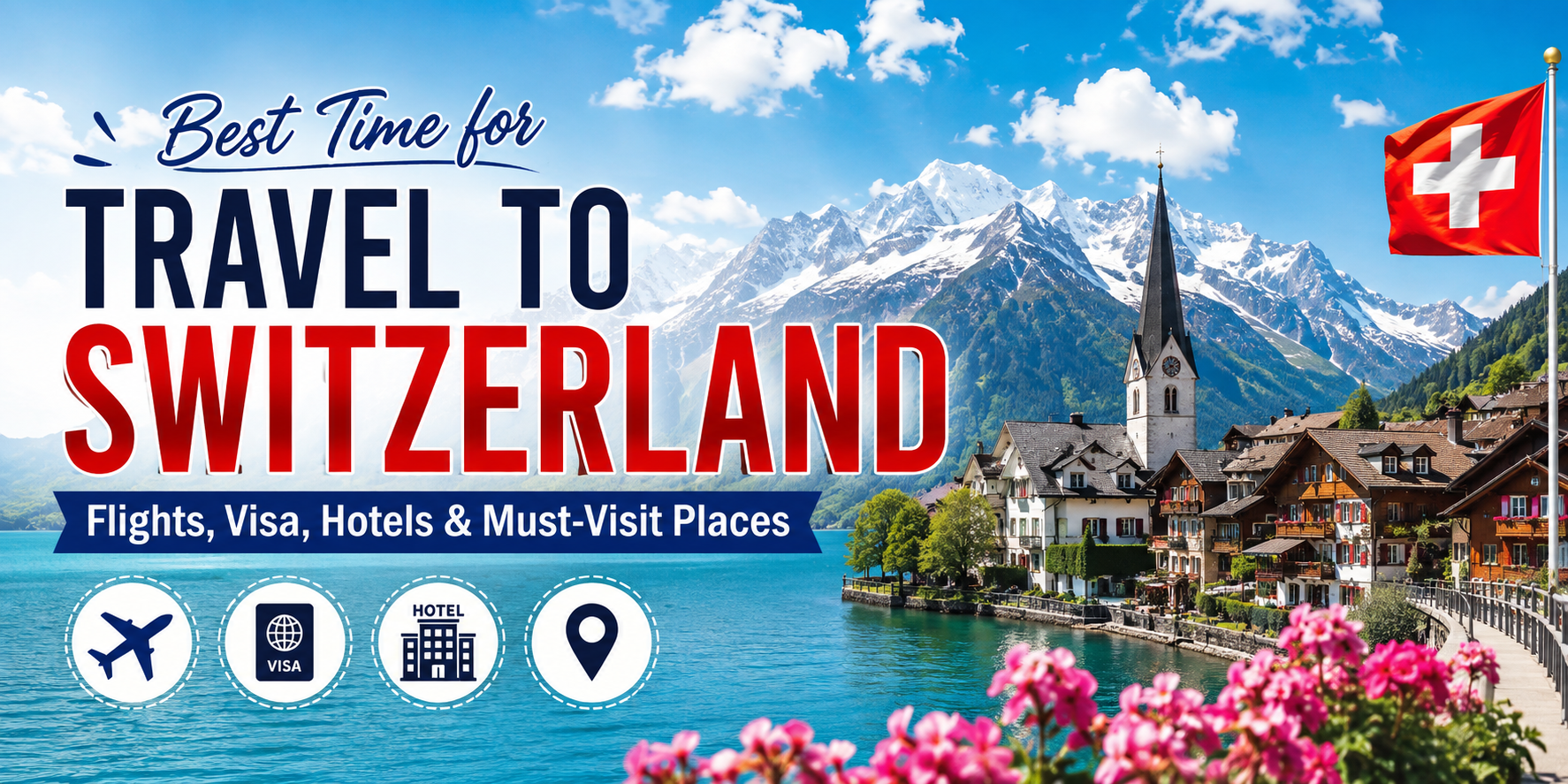
Switzerland is one of those rare destinations that looks like a postcard in every season snow-capped Alps in winter, blooming meadows in spring, sparkling lakes in summer, and golden vineyards in autumn. But if you want to make the most of your trip, timing matters just as much as the destination itself. Whether you’re chasing ski slopes, hiking trails, or scenic train rides, knowing the best time for travel to Switzerland can save you money, help you avoid crowds, and let you experience the country at its most beautiful.
This guide covers everything you need from seasonal weather patterns and flight booking tips to visa requirements, hotel recommendations, and the must-visit places that make Switzerland a bucket-list destination.
When Is the Best Time to Visit Switzerland?
Switzerland doesn’t really have a “bad” season, but each part of the year offers a different experience. Choosing the best time to travel to Switzerland really depends on what you want out of your trip.
Spring (March to May): Blooming Landscapes and Fewer Crowds
Spring is an underrated time to visit. The snow starts melting in the lower valleys, wildflowers bloom across the meadows, and waterfalls like Trümmelbach Falls flow at full strength. Temperatures range from 8°C to 18°C, making it comfortable for city exploration in Zurich, Geneva, and Lucerne. Since spring falls in the shoulder season, it’s also one of the best times for budget travel to Switzerland, with lower hotel rates and thinner crowds at popular attractions.
Summer (June to August) | Peak Season for Hiking and Alpine Views
Summer is the most popular season, and for good reason. With long daylight hours and mild temperatures between 18°C and 28°C, this is prime time for hiking in the Swiss Alps, cable car rides, and lake activities in Interlaken and Lake Geneva. However, this is also when flight and hotel prices in Switzerland peak, so early booking is essential if you’re traveling between June and August.
Autumn (September to November) | Golden Scenery and Wine Harvests
Autumn brings crisp air, colorful foliage, and grape harvest season in wine regions like Lavaux and Valais. Crowds thin out significantly after September, and prices start dropping again. This season is often considered the best time to visit Switzerland for photography lovers, thanks to the dramatic color contrast between golden trees and snow-dusted peaks.
Winter (December to February) | Ski Season and Christmas Markets
For skiing, snowboarding, and festive Christmas markets, winter is unbeatable. Resorts like Zermatt, St. Moritz, and Verbier come alive with world-class slopes and après-ski culture. If winter sports are your priority, this is the best time to travel to Switzerland for skiing, though you should expect higher accommodation costs in alpine resort towns.
Best Time to Book Flights to Switzerland
Flight prices to Switzerland fluctuate significantly depending on the season and how early you book. Zurich Airport (ZRH) and Geneva Airport (GVA) are the two main international gateways, with direct flights from major hubs in the US, UK, Middle East, and Asia.
For the most affordable flights to Switzerland, aim to book at least 2–3 months in advance for summer travel and 4–6 weeks ahead for winter or shoulder-season trips. Tuesday and Wednesday departures tend to be cheaper than weekend flights. If your travel dates are flexible, flying during the shoulder months of April, May, September, or October often means significantly lower airfare compared to the peak summer rush.
Pro tip: Set up fare alerts through Google Flights or Skyscanner, and consider flying into Zurich and out of Geneva (or vice versa) if you’re planning a multi-city itinerary — this “open-jaw” routing can save both time and money.
Switzerland Visa Requirements | What You Need to Know
Switzerland is part of the Schengen Area, which means the visa process follows Schengen rules. Here’s a quick breakdown:
Who Needs a Visa?
- Citizens of the EU/EFTA, US, UK, Canada, Australia, and several other countries can enter Switzerland visa-free for tourism stays up to 90 days within a 180-day period.
- Citizens of countries not on the Schengen visa-exempt list must apply for a Switzerland Schengen visa before traveling.
Documents Typically Required
- Valid passport (with at least 3 months validity beyond your planned departure)
- Completed visa application form
- Proof of travel insurance covering at least €30,000 in medical expenses
- Confirmed flight itinerary and hotel bookings
- Proof of sufficient funds for the trip
- Cover letter explaining the purpose of travel
Applications are usually submitted through the Swiss embassy or consulate in your home country, or via VFS Global visa application centers. Processing typically takes 10 to 15 working days, so it’s wise to apply at least a month before your trip, especially during the busy summer travel season when processing times can stretch longer.
Best Hotels and Places to Stay in Switzerland
Switzerland offers accommodation for every budget, from cozy alpine chalets to five-star lakeside resorts.
Luxury Stays
If you’re looking for a splurge-worthy experience, hotels like Badrutt’s Palace in St. Moritz or The Chedi Andermatt offer unmatched luxury with mountain views, spa facilities, and Michelin-recommended dining. These properties are especially popular during ski season and holiday periods.
Mid-Range Comfort
For travelers seeking comfort without breaking the bank, cities like Lucerne, Bern, and Basel offer excellent mid-range hotels in Switzerland with easy access to train stations and city centers. Boutique guesthouses in the Bernese Oberland region also provide charming, authentic Swiss hospitality.
Budget-Friendly Options
Switzerland has a strong hostel and budget-hotel culture, particularly in Zurich, Interlaken, and Lausanne. Booking in advance and traveling during shoulder season can cut accommodation costs by 30–40% compared to peak summer or winter rates.
Booking tip: Reserve accommodations in mountain towns like Zermatt and Grindelwald well in advance if traveling during ski season or major hiking festivals, as rooms fill up quickly.
Must-Visit Places in Switzerland
No trip to Switzerland is complete without exploring its iconic cities, alpine towns, and natural wonders.
Zurich
Switzerland’s largest city blends historic charm with modern energy. Stroll along the Limmat River, explore the Old Town, and enjoy lakeside cafés with views of the Alps in the distance.
Lucerne
Famous for the Chapel Bridge and Lake Lucerne, this picturesque town is a gateway to Mount Pilatus and Mount Rigi, both accessible by scenic cogwheel trains and cable cars.
Interlaken
Nestled between Lake Thun and Lake Brienz, Interlaken is the adventure capital of Switzerland, offering paragliding, skydiving, and access to the famous Jungfraujoch — the “Top of Europe.”
Zermatt and the Matterhorn
Home to the iconic Matterhorn peak, Zermatt is a car-free alpine village perfect for skiing in winter and hiking in summer. The views here are among the most photographed in the world.
Geneva
A cosmopolitan city on the shores of Lake Geneva, known for the Jet d’Eau fountain, international organizations, and proximity to French Alps day trips.
Lauterbrunnen Valley
Often called one of the most beautiful valleys in the world, Lauterbrunnen features 72 waterfalls cascading down steep cliffs, including the famous Staubbach Falls.
For travelers, this means the information you find (like in this guide) should be practical enough to act on immediately — whether that’s booking a flight, applying for a visa, or picking the right hotel for your travel style.
Choosing Your Ideal Time to Visit
There’s no single “perfect” month to visit Switzerland it truly depends on your priorities. Winter sports lovers should aim for December through February, hikers and lake enthusiasts will love June through August, and those wanting fewer crowds and lower costs should consider spring or autumn.
Whichever season you choose, planning ahead booking flights early, understanding visa requirements, and reserving accommodations in advance will ensure your Swiss adventure is as smooth as it is unforgettable. From the snow-dusted peaks of Zermatt to the lakeside charm of Lucerne, Switzerland rewards travelers who plan wisely and explore deeply.