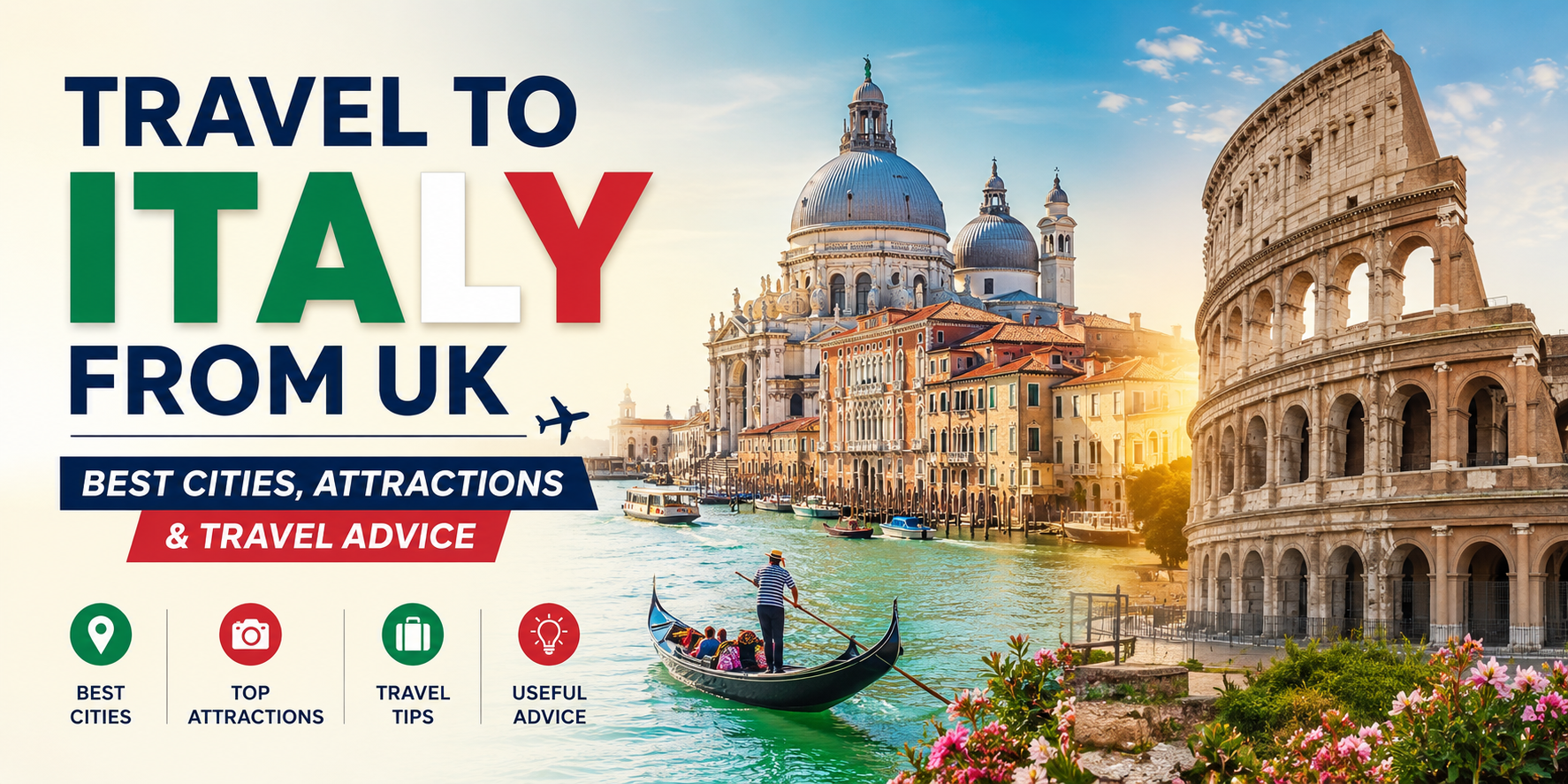
Italy remains one of the most popular short-haul destinations for British travellers, and it’s easy to see why. From Roman ruins to Renaissance art, coastal villages to snow-capped Alps, travel to Italy from UK airports has never been more accessible. With direct flights from nearly every major UK city and journey times often under three hours, a long weekend in Florence or a two-week road trip through Tuscany is well within reach.
This guide covers everything a UK traveller needs to know in 2026 from entry requirements and the best ways to get there, to the top cities, attractions, and practical travel advice that will help you plan a smooth, well-informed trip.
Why Travel to Italy from UK Is Easier Than You Think?
Despite Brexit changing some of the rules around European travel, getting from the UK to Italy is still remarkably straightforward. British passport holders don’t need a visa for short tourist stays, flight routes are plentiful and competitively priced, and Italy’s rail and road networks make it easy to combine multiple cities in a single trip. Whether you’re chasing art in Florence, food in Bologna, or beaches in Sicily, the logistics of UK to Italy travel are simpler than most people expect.
Entry Requirements | Travel from UK to Italy in 2026
Understanding entry requirements is the first step in any trip, and the rules have shifted since the UK left the EU. Here’s what currently applies.
Passport Rules
Your passport must be valid for at least three months beyond your planned departure date from the Schengen Area, and it should have been issued within the last ten years. It’s worth double-checking both dates before booking, as airlines and border officials in Italy do enforce this rule strictly.
ETIAS Travel Authorisation
One of the biggest upcoming changes for travel to Italy from UK airports is the introduction of ETIAS — the European Travel Information and Authorisation System. According to the official ETIAS website, the system is expected to begin operations in the last quarter of 2026, though an exact start date hasn’t yet been confirmed. Once live, UK travellers will need to apply online for authorisation before entering Italy and 29 other participating European countries, at a cost of €20 per adult (travellers under 18 or over 70 are exempt from the fee). ETIAS is not a visa — it’s a quick digital screening process, similar in spirit to the US ESTA system, and once approved it typically remains valid for up to three years. Until the system launches, no action is needed, and travellers should be cautious of third-party websites already claiming to process applications.
Visa-Free Stays
For now, and for short trips generally, British citizens can still visit Italy visa-free for up to 90 days within any 180-day period, provided the trip is for tourism, business, or family visits. Longer stays, work, or study will require the appropriate visa arranged in advance through the Italian consulate.
Best Ways to Travel from UK to Italy
There are several practical routes for getting from the UK to Italy, and the right one depends on your budget, time, and how much of the country you want to see.
Flights from UK to Italy
Flying remains the fastest and most popular option. Flights from UK to Italy run from London, Manchester, Birmingham, Edinburgh, and other regional airports to major Italian hubs including Rome, Milan, Venice, Naples, and Bologna. Budget carriers alongside British Airways and ITA Airways offer frequent departures, with flight times ranging from around two to three hours depending on your origin and destination.
Train Travel from UK to Italy
For a slower, more scenic journey, travelling by train is a genuine alternative. Taking the Eurostar to Paris or Brussels and connecting onward via high-speed European rail can get you into northern Italian cities like Milan or Turin in under 12 hours. It’s a popular choice for travellers who want to minimise their carbon footprint or enjoy the journey as part of the holiday itself.
Driving to Italy from UK
Driving is the most flexible option for those wanting to explore multiple regions or bring more luggage. Crossing via the Eurotunnel or a cross-Channel ferry, then driving through France and over the Alps or along the coast, typically takes one to two days depending on your final destination in Italy. This route suits travellers heading to northern regions like Lombardy, Piedmont, or the Italian Lakes.
Best Cities to Visit in Italy
Italy’s cities each offer a distinctly different experience, which is exactly why so many UK travellers return again and again. Here are the best cities in Italy to prioritise on a first or repeat visit.
Rome
The capital is unmatched for history, home to the Colosseum, the Roman Forum, the Pantheon, and Vatican City. Two to three days is a reasonable minimum to see the highlights without rushing.
Florence
The birthplace of the Renaissance, Florence offers world-class art at the Uffizi Gallery, the iconic Duomo, and the Ponte Vecchio bridge. It’s compact enough to explore comfortably on foot in a day or two, making it ideal for a short break.
Venice
Famous for its canals, gondolas, and St Mark’s Square, Venice is unlike anywhere else in Europe. Visiting outside peak summer months is recommended for a more relaxed experience and better value accommodation.
Milan
Italy’s fashion and design capital combines sleek modern architecture with the stunning Duomo di Milano cathedral and Leonardo da Vinci’s The Last Supper. It’s also a major transport hub, making it a practical base for exploring northern Italy.
Naples and the Amalfi Coast
Naples offers gritty authenticity, incredible pizza, and easy access to Pompeii and Herculaneum, while the nearby Amalfi Coast delivers some of Europe’s most dramatic coastal scenery, with towns like Positano and Ravello drawing visitors year-round.
Top Attractions in Italy Worth Visiting
Beyond the major cities, several attractions in Italy consistently top traveller wish lists. The ruins of Pompeii offer a haunting, remarkably preserved glimpse into Roman life before the eruption of Mount Vesuvius. The Cinque Terre — five colourful cliffside villages on the Ligurian coast — are best explored by hiking trail or local train. Lake Como and Lake Garda provide a mix of alpine scenery and lakeside glamour, popular with both day-trippers and longer-stay visitors. For wine lovers, the rolling hills of Tuscany and the Piedmont region offer vineyard tours and tastings that pair naturally with a slower-paced itinerary.
Best Time to Travel to Italy from UK
Timing your trip well makes a significant difference to both cost and comfort. Spring (April to June) and autumn (September to October) offer mild weather, thinner crowds, and better prices than the peak summer months. July and August bring intense heat, particularly in southern regions and cities like Rome and Naples, along with higher accommodation costs and crowded attractions. Winter, meanwhile, is an underrated time to visit cities like Rome and Florence, with markets, shorter queues, and the possibility of combining a city break with skiing in the Italian Alps or Dolomites.
Travel Advice & Tips for UK Visitors
A few practical tips can make the difference between a good trip and a great one. Always carry a printed or digital copy of your travel insurance and accommodation confirmations, as Italian border officials occasionally request proof of onward travel or sufficient funds. Public transport in major cities is generally reliable, but tickets must be validated before boarding trains and buses to avoid fines. It’s also worth learning a few basic Italian phrases locals genuinely appreciate the effort, even in heavily touristed areas. Finally, many smaller restaurants and shops, particularly outside major cities, still prefer cash, so it’s sensible to carry some euros alongside a card.
Frequently Asked Questions
Do UK citizens need a visa to travel to Italy?
No. British passport holders can currently visit Italy visa-free for up to 90 days within a 180-day period for tourism or business purposes.
Will UK travellers need ETIAS to visit Italy?
Yes, starting from the last quarter of UK travellers will need ETIAS authorisation before entering Italy and other participating European countries, at a cost of €20 per adult.
How long is the flight from the UK to Italy?
Most direct flights from the UK to Italian cities take between two and three hours, depending on the departure airport and destination.
What is the best city to visit in Italy for a first trip?
Rome is often recommended for first-time visitors due to its concentration of historic landmarks, though Florence and Venice are equally popular for shorter breaks.
What is the cheapest way to travel from the UK to Italy?
Budget airline flights are usually the cheapest option, though travelling by train or coach via France can be competitive, particularly when booked well in advance.
Final Thoughts
Whether it’s a weekend in Rome, a road trip through Tuscany, or a coastal escape to the Amalfi Coast, Italy continues to offer exceptional value and variety for UK travellers. Staying informed about entry requirements particularly the upcoming ETIAS system and planning around the right season will help ensure a smooth, enjoyable trip from the moment you land to the moment you reluctantly head home.