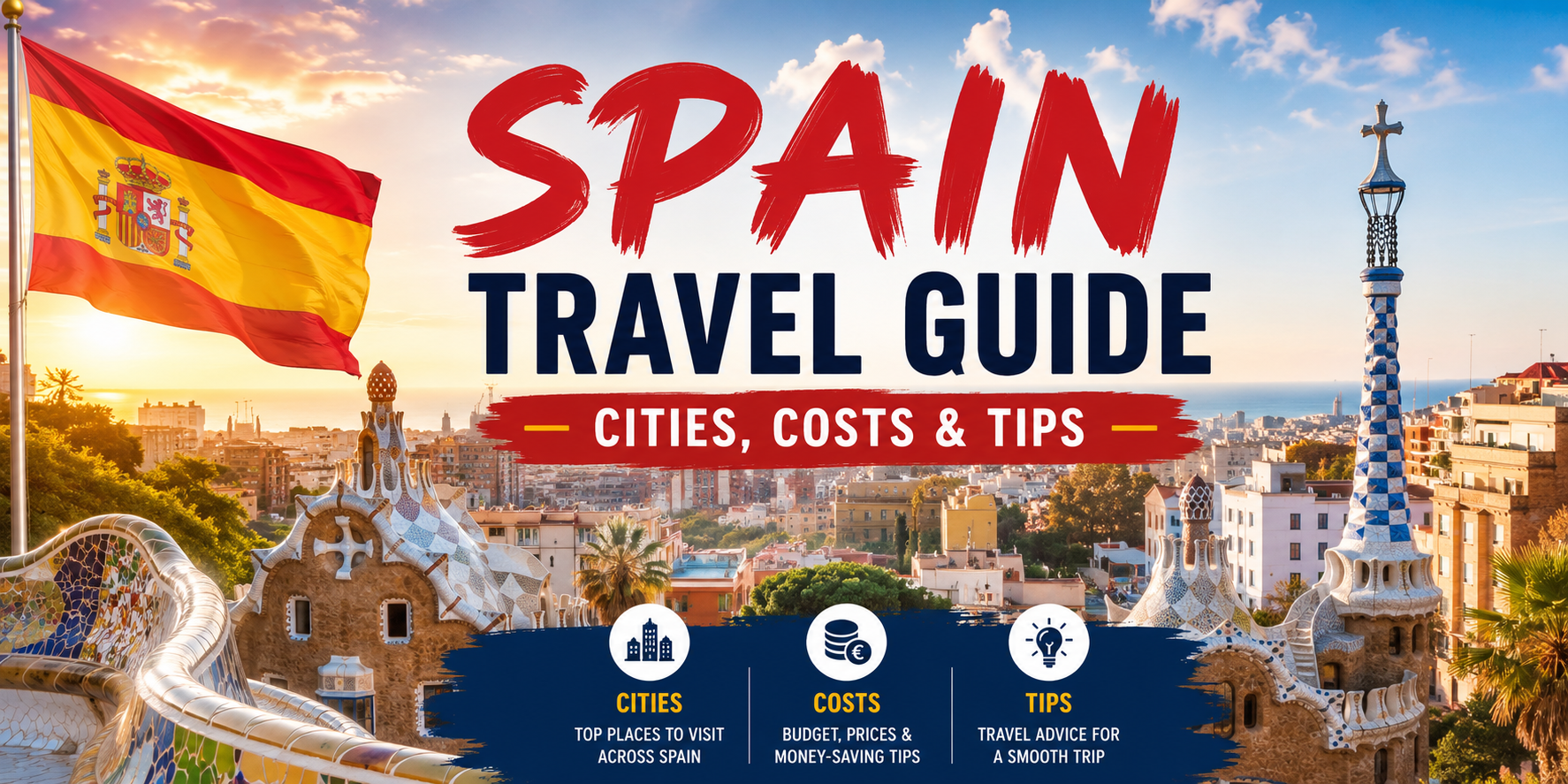
Spain remains one of Europe’s most rewarding destinations, blending historic architecture, world-class food, and sun-soaked coastlines into a single trip. Whether you’re chasing tapas in Madrid or beaches in the Balearics, this guide breaks down the best cities to visit, what your trip will realistically cost, and practical tips to make your journey smooth from the moment you land.
Why Spain Should Be on Your Travel List?
Spain draws over 80 million visitors a year, and for good reason — few countries offer such a mix of culture, climate, and value in one place. From Gothic cathedrals to Michelin-starred street food, Spain rewards both first-time visitors and repeat travelers. It’s also one of the most accessible entry points into Europe, which matters if you’re planning travel to Spain from UK airports, since flight times average just two to three hours from most major UK cities.
This guide is written for travelers planning their first (or fifth) trip to Spain, covering everything from city-by-city breakdowns to budgeting advice and seasonal tips, so you can plan confidently regardless of your starting point or travel style.
Best Cities to Visit in Spain
Madrid | The Cultural Heart
Madrid is Spain’s capital and a natural first stop for most itineraries. The city is home to the Prado Museum, Retiro Park, and a nightlife scene that genuinely starts after midnight. Madrid is centrally located, making it an easy hub for day trips to Toledo or Segovia. Public transport is efficient and affordable, and the city’s tapas culture means you can eat well without a formal sit-down dinner every night.
Barcelona | Architecture and Coastline
Barcelona combines Gaudí’s surreal architecture the Sagrada Família and Park Güell are must-sees — with beachfront access rare among major European cities. It’s walkable, bike-friendly, and split into distinct neighborhoods like Gràcia and the Gothic Quarter, each with its own personality. Barcelona tends to be pricier than other Spanish cities, so budgeting a little extra here is wise.
Seville | Andalusian Charm
Seville offers a slower pace and deep flamenco roots. The Alcázar palace and Plaza de España are architectural highlights, and the city is notably cheaper than Madrid or Barcelona. Summers here are intensely hot, so spring and autumn are the better windows to visit.
Valencia | Beaches Meets Innovation
Valencia is often overlooked but shouldn’t be. It’s the birthplace of paella, home to the futuristic City of Arts and Sciences, and has some of the best urban beaches in Spain. Costs here run noticeably lower than in Barcelona, making it a strong pick for budget-conscious travelers who still want a coastal experience.
San Sebastián | Food Capital of the North
For travelers prioritizing food, San Sebastián in the Basque Country holds more Michelin stars per capita than almost anywhere in the world. Its pintxos bar-hopping culture is a genuinely different experience from tapas further south, and the coastal scenery rivals anything in southern France.
What Does a Trip to Spain Cost?
Spain remains one of Western Europe’s better-value destinations, though costs vary significantly by city and season.
- Budget travelers: €50–70/day covering hostels, public transport, and casual meals
- Mid-range travelers: €100–150/day for 3-star hotels, sit-down meals, and some paid attractions
- Luxury travelers: €250+/day for boutique hotels, fine dining, and private tours
Flights are usually the first cost travelers research, and pricing varies a lot depending on origin and season. Interestingly, many travelers comparing routes also search for travel from UK to USA costs when planning multi-leg trips, since some itineraries combine a European leg with a transatlantic one. If that’s your plan, booking each leg separately often works out cheaper than a single combined ticket, and flying midweek typically shaves a meaningful amount off both routes.
Accommodation is generally cheaper outside Madrid and Barcelona, and rail travel via Renfe is often more cost-effective than domestic flights for shorter distances, such as Madrid to Toledo or Barcelona to Girona.
Best Time to Visit Spain
- Spring (April–June): Mild weather, fewer crowds, ideal for city exploring
- Summer (July–August): Peak season, hot in the south, best for beach destinations in the north
- Autumn (September–October): Warm days, thinner crowds, harvest season in wine regions
- Winter (November–March): Lowest prices, mild in the south, colder in the north and interior
Shoulder seasons — spring and early autumn — consistently offer the best balance of good weather, manageable crowds, and reasonable prices.
Practical Travel Tips for Spain
Getting Around
Spain’s high-speed AVE trains connect major cities efficiently, often faster door-to-door than flying once airport time is factored in. Within cities, metro systems in Madrid and Barcelona are extensive and inexpensive.
Entry Requirements
UK travelers currently don’t need a visa for short stays in Spain, though ETIAS authorization requirements have been phased in for UK passport holders visiting the Schengen Area — it’s worth checking current status before booking, since these rules have shifted in recent years. Anyone researching travel to Spain from UK should also confirm passport validity requirements, as Spain typically requires at least three months’ validity beyond your planned departure date.
Money and Payments
Spain is largely card-friendly, but smaller towns and traditional tapas bars still favor cash, so carrying some euros is sensible. Contactless payments are widely accepted in cities.
Local Etiquette
Meal times run later than in the UK or US — lunch around 2 PM, dinner rarely before 9 PM. Many shops close for a midday siesta in smaller towns, though this is less common in major cities.
Frequently Asked Questions
Is Spain expensive to visit?
No, Spain is considered mid-range by European standards, generally cheaper than France, Italy, or the UK for comparable experiences.
How many days do I need in Spain?
A minimum of 7–10 days lets you cover two or three cities without rushing. Two weeks allows a more relaxed pace across regions.
Is Spain safe for tourists?
Yes, Spain is broadly safe, though petty theft in tourist-heavy areas like Barcelona’s Las Ramblas is worth staying alert to.
What language is spoken in Spain?
Spanish (Castilian) is the national language, though Catalan, Basque, and Galician are regionally spoken in their respective areas.
Final Thoughts
Spain rewards travelers who mix at least one major city with a smaller, slower-paced destination. Pairing Madrid with Seville, or Barcelona with San Sebastián, gives a fuller picture of the country than sticking to one region. With reasonable costs, strong transport links, and short flight times from the UK, Spain continues to be one of the most practical and rewarding European destinations to plan a trip around — whatever your budget or travel style.